How Boissons du Cameroun transformed its traceability with GS1 standards
From the bottling line to distribution: case study, May 2024
Project carried out in May 2024 with Boissons du Cameroun, from the bottling line to distribution.

The challenge: unbroken traceability in the beverage industry
In the beverage industry, the speed of production lines, the volumes handled and the many logistics areas make traceability particularly complex. When product identification and movement capture are not harmonised, field teams lose precious time on manual searches, and discrepancies between field data and the information system build up.
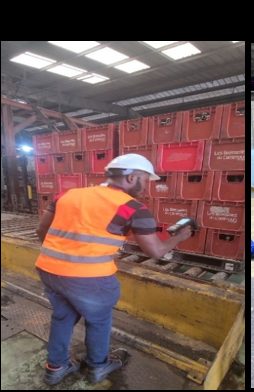
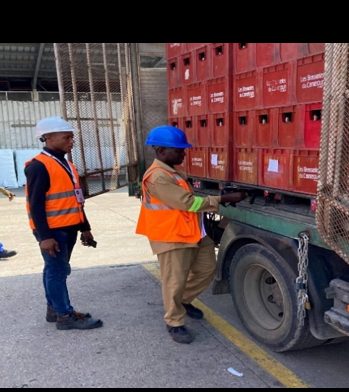
In May 2024, GS1 Cameroon carried out with Boissons du Cameroun (SABC) an ambitious field project: testing complete continuity of identification and capture, from the packaging of finished products to distribution logistics operations.
The challenges identified before the project
- Link product, batch, crate/pallet and site without any break in identification
- Reduce manual searches and discrepancies between the field and the system
- Speed up locating a batch in the event of an inspection, dispute or product recall
- Create an interoperable foundation with existing operational systems and SAP
The GS1 solution: a 5-level identification architecture
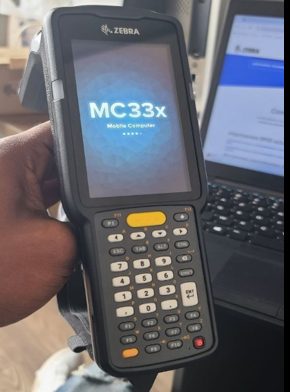
Standards used: GTIN, Lot/Batch, SSCC, GLN, GS1-128 and EPCIS. Mobile terminals Zebra MC33x used in the field.
The results: from traceability to measurable performance
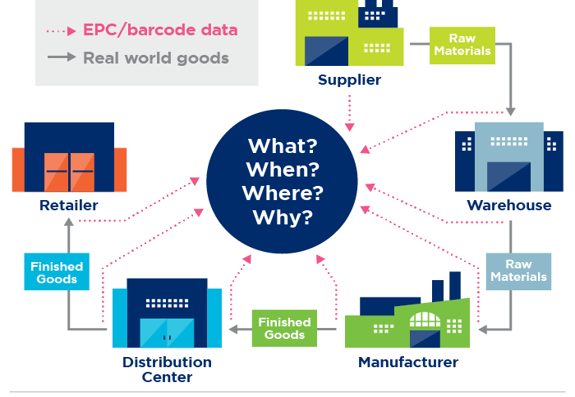
GS1 traceability answers 4 questions:
- WHAT ? Which product / batch / unit?
- WHEN ? When did the event take place?
- WHERE ? At which site / location?
- WHY ? For which business operation?
| Indicator | Before | After pilot | Impact |
|---|---|---|---|
| Time to locate a batch | 30-45 min | 5-10 min | −75 to −85% |
| Automatic capture of movements | 55–65 % | 90–95 % | +30 pts |
| Field / system accuracy | 92–95 % | 98–99 % | +4 to 6 pts |
| Movements with manual re-entry | 25–35 % | < 10 % | −70 % |
| Time to check a logistic unit | 2-3 min | < 1 min | −60 % |
* Indicative results reconstructed from the May 2024 pilot, to be confirmed with Boissons du Cameroun.
What this project changes in practice
- Moving from manual searching to identifier-driven traceability
- Ability to target a specific batch in the event of an investigation or product recall
- Consistent data between field operations and information systems
- Reusable foundation for RFID automation and SAP integrationreplicable multi-site model
To go further: Product traceability & stock management.
ONE IDENTIFICATION. ONE TRACEABILITY. ONE TRUSTED DATA SOURCE.
Are you an industrial company in Cameroon looking to structure the traceability of your finished products with GS1 standards?
Get your GS1 617 barcode Download the case study